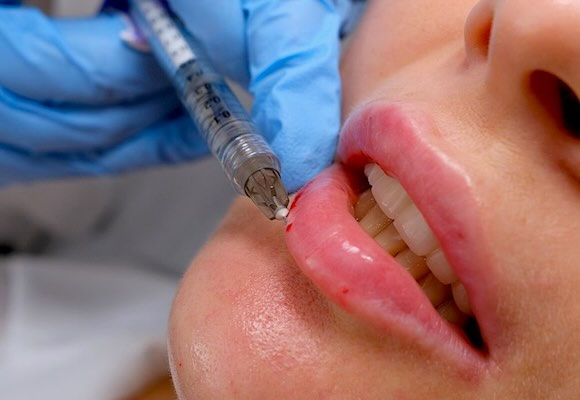
What are polynucleotides biostimulators?

Polynucleotides are injectable biostimulators made from purified fragments of DNA (polynucleotide chains), most commonly derived from salmon or trout using highly purified manufacturing processes. They are not dermal fillers and do not add volume. Instead, they work by stimulating the skin's natural repair mechanisms.
Their main effects include:
Stimulating fibroblasts, the cells that produce collagen and elastin.
Improving skin hydration by supporting the extracellular matrix.
Reducing inflammation and oxidative stress.
Promoting tissue repair and regeneration.
Gradually improving skin texture, elasticity and fine lines.
Unlike hyaluronic acid fillers, the improvement develops over several weeks as the skin produces new collagen rather than through immediate volume replacement.
They are commonly used for:
Under-eye skin
Face
Neck
Décolletage
Hands
Acne scars
Skin damaged by ageing or sun exposure
Results are gradual, with a course of 2–4 treatments typically recommended, spaced 2–4 weeks apart. Improvements may continue for several months after the final session. However, a single session will not typically produce a dramatic change.
Polynucleotides are considered biostimulators because they stimulate the body's own regenerative processes rather than acting as a filler or simply hydrating the skin. They differ from other biostimulators such as calcium hydroxylapatite or poly-L-lactic acid by focusing more on tissue repair and skin quality than on restoring facial volume.